
Matrix & Tissue Signaling Peptides
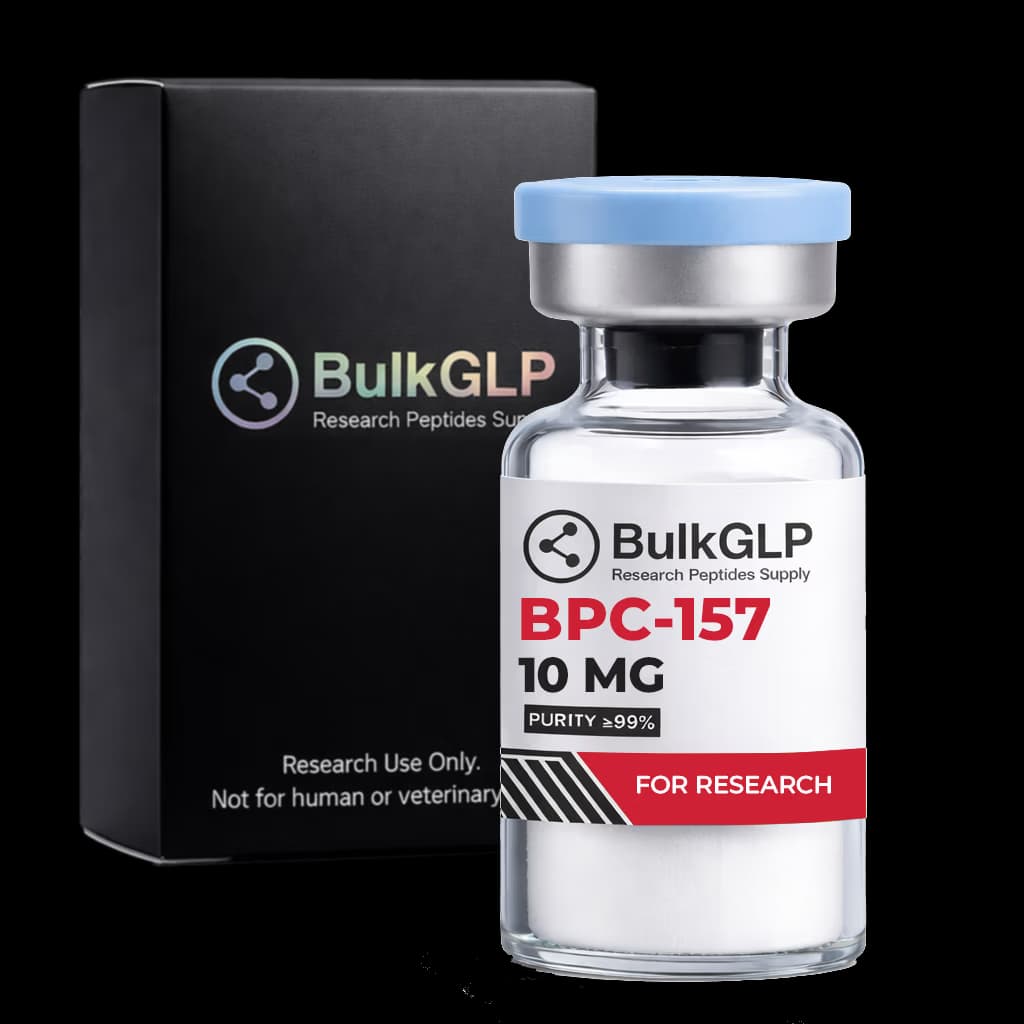
BPC-157 Research Peptide – 10 mg Vial
BPC-157 is listed in a 10 mg vial as a synthetic 15-residue, lyophilized research peptide. Review the active-lot report for identity, measured content, purity and the tests actually performed. Analytical results apply to the identified lot. For laboratory research only; not for human or veterinary use.
View batch documentationAbout BPC-157
BPC-157 is a synthetic, linear peptide of 15 amino acids. Its reference sequence, in one-letter code from the N-terminus, is GEPPPGKPADDAGLV, with both terminal groups left unmodified. The material in each vial is lyophilized, so it is supplied freeze-dried rather than in solution.
One unit is one vial holding a nominal 10 mg of BPC-157. Buy a single vial, or take the 10-pack at 20% off per vial, which works out to ten vials for the price of eight. This page carries the certificate of analysis for the lot currently on sale. BPC-157 is also a named component of the KLOW, GLOW and Wolverine blends.
- Format
- Lyophilized vials
- Sizes
- 10 mg
- Order options
- Single or 10-pack · the 10-pack saves 20% per unit
- Latest lot report
- 98.07% reported purity · Lot 96494
- Ships
- Same business day when paid before 2 PM Central · USPS, UPS or FedEx with tracking
- Storage
- Sealed and dry, typically −20 °C · Storage guide
Research context and material documentation
Separate molecular identity and published research from the format supplied here and the results reported for an individual lot.
BPC-157 identity and reference structure
BPC-157 is a synthetic, linear pentadecapeptide: a chain of fifteen amino acid residues. Its reference sequence is GEPPPGKPADDAGLV, written from the amino terminus to the carboxyl terminus. The expanded notation H-Gly-Glu-Pro-Pro-Pro-Gly-Lys-Pro-Ala-Asp-Asp-Ala-Gly-Leu-Val-OH specifies unmodified terminal groups. Sequence, terminal chemistry and chemical form belong in an identity specification; the name BPC-157 alone is a shorter label for that specification.
The figures below describe the parent peptide recorded in PubChem. They exclude acetate, trifluoroacetate, residual water and other material that may accompany a supplied powder. A reference molecular weight is therefore a comparison value for the defined molecule, rather than a measurement of the contents or purity of a particular vial.
Research models and what they measure
Published BPC-157 work includes experiments on cultured rat tendon fibroblasts. Chang and colleagues assessed cell migration, actin organization and phosphorylation of focal adhesion kinase and paxillin. Those endpoints address specific cellular responses within the reported model. They do not establish that another preparation reproduces the experiment, and they are not evidence of a guaranteed outcome from the material offered here.
Analytical researchers have also investigated BPC-157 metabolism using isotope labeling and ultra-high-performance liquid chromatography with high-resolution mass spectrometry. Metabolite identification is distinct from a release assay for an unopened vial. When comparing papers, retain the sample matrix, analytical platform and experimental conditions alongside the reported result.
Reading identity, purity and content together
A mass-spectrometry result should state the measured ion, its charge state and the theoretical mass used for comparison. A multiply charged ion is reported as mass-to-charge ratio, so its displayed number need not equal the neutral molecular weight. A matching intact mass supports identity but does not independently establish every residue position or stereochemical detail.
HPLC purity describes the detected peaks under the stated separation and integration method. Quantitative peptide content answers a different question: how much specified peptide was measured in the submitted sample. Evaluate both findings with their methods and sample identifiers. A high chromatographic percentage cannot, by itself, convert a nominal vial label into a measured amount.
For a reproducible comparison, retain the method version and the reference material used by the laboratory. Two reports with different separation conditions or mass conventions may not be directly comparable even when both use the BPC-157 name. Resolve those differences before interpreting a discrepancy as a change in material quality.
Format, handling records and lot selection
The catalog lists a nominal 10 mg research vial. Nominal amount, parent molecular weight and measured sample content are separate fields. Match the received product and lot to its report before using any reported result in a laboratory record. Do not transfer a result from a different size, formulation or historical lot.
Record the supplied chemical form, receipt date, seal condition and documented storage or retest requirements. Experimental sample preparation should follow a method suitable for the intended analysis. This reference does not assign a universal solution stability, storage temperature or expiry period; those require evidence for the actual material and conditions.
Frequently asked questions
Does the CAS number prove the identity of a received vial?
No. A registry identifier defines the intended reference substance. Evidence for the received material must come from its traceable sample documentation and suitable analytical results.
Are the parent peptide and an acetate preparation identical specifications?
No. They share a peptide moiety, but a salt specification must also address its counterion and amount. The parent formula and mass shown above do not quantify acetate or water.
Related research materials
Molecular reference specifications
Reference identities do not establish a supplied lot’s analytical results.
- Reference compound
- BPC-157; linear 15-residue peptide
- Parent CAS registry number
- 137525-51-0
- Parent molecular formula
- C62H98N16O22
- Parent molecular weight
- 1419.5 g/mol (PubChem average molecular weight)
- Reference sequence
- H-GEPPPGKPADDAGLV-OH
- Supplied counterion and hydration
- Not established by these parent-molecule identifiers; consult the lot specification
Sources: PubChem: BPC-157, CID 9941957 (opens in a new tab) · Chang et al.: BPC-157 in tendon fibroblast experiments (2011) (opens in a new tab) · Isotope labeling and UHPLC-HRMS characterization of BPC-157 metabolism (2023) (opens in a new tab) · USP researchers: reference standards and quality characterization of synthetic peptides (2023) (opens in a new tab)
Editorial review: · BulkGLP.
THE BULKGLP STANDARD
Quality tested.
Confidence delivered.
Our quality program combines independent lab testing for purity, identity and content with published batch reports. See the results behind BulkGLP quality and shop with confidence.
For the limits of a report and the distinction between identity, purity and content, read public analytical verification.
CONTINUE EXPLORING
Related research products.
 In stock
Glow Blend
2 format options
 In stock
Wolverine Peptide (BPC-157 + TB-500 Blend)
2 format options
 In stock
KLOW Peptide – BPC-157, KPV, TB-500, GHK-Cu
2 format options
 In stock
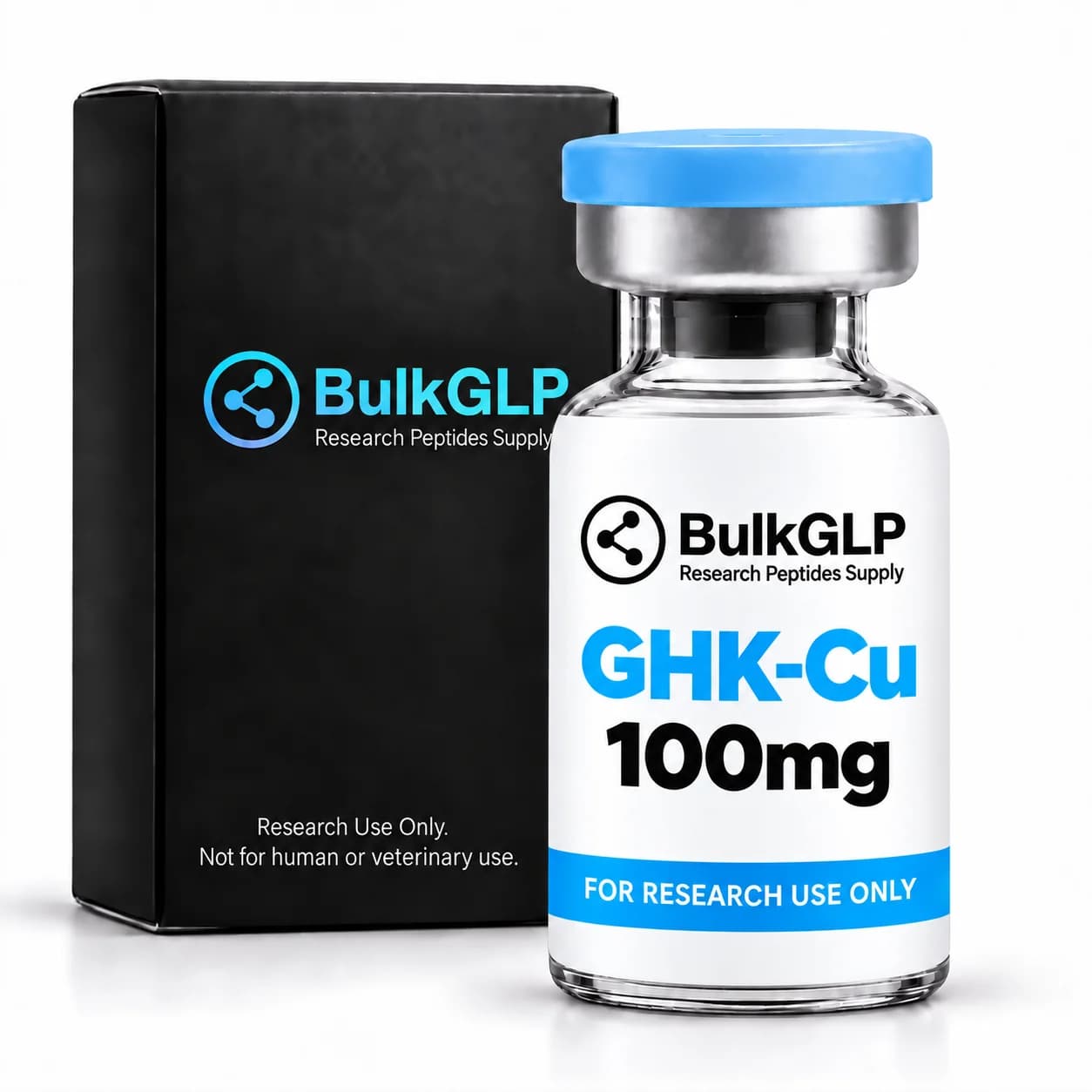
GHK-Cu Peptide (GHKCu) — 100mg Research Vial
2 format options