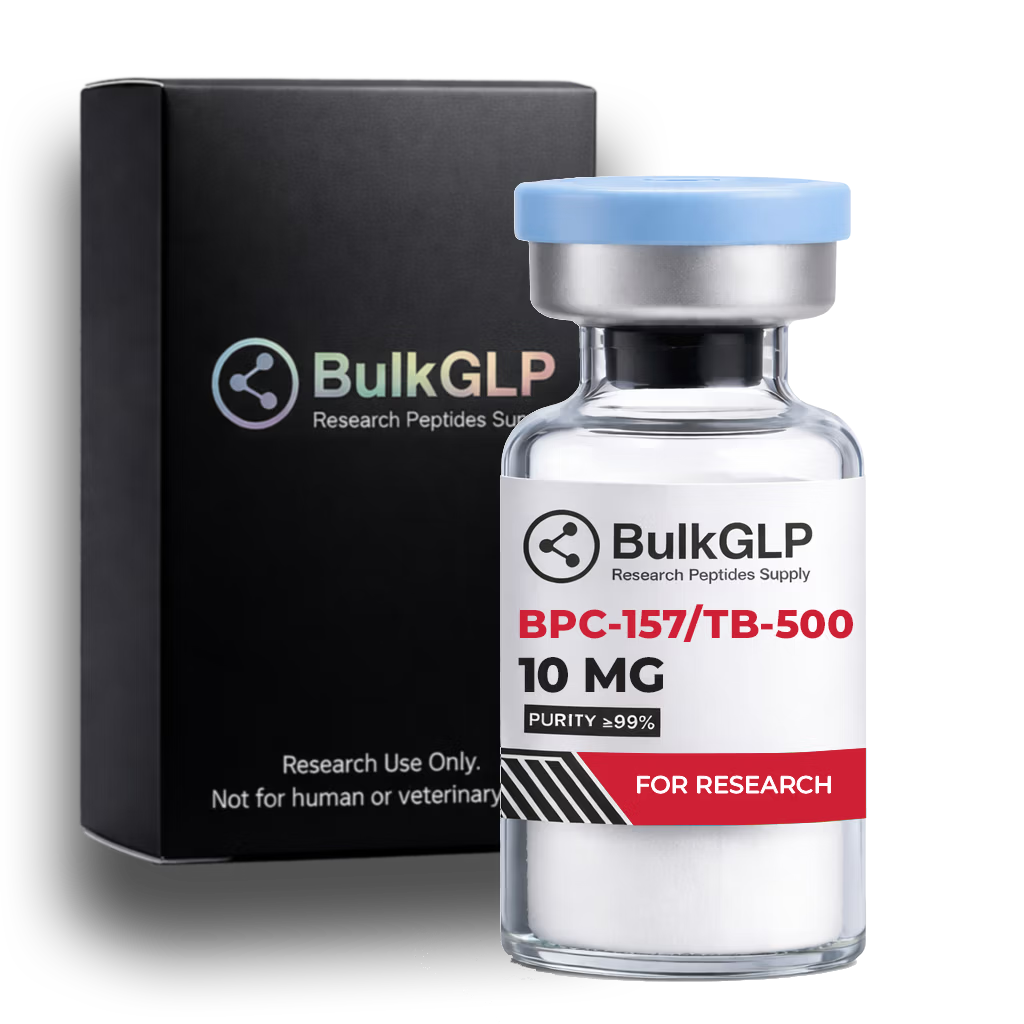
Wolverine Peptide (BPC-157 + TB-500 Blend)
Free Priority Shipping on Orders $99+
Wolverine peptide is a combined lyophilized BPC-157 + TB-500 research material, also called the Wolverine blend. Confirm the supplied lot’s component identities, amounts, ratio, and formulation. No lot-specific COA is currently linked on this listing. For in-vitro laboratory research and development only. Not for human or veterinary use.
$115.00
In stock
In stock
BulkGLP’s BPC-157 + TB-500 Blend is a combined lyophilized research material. The term Wolverine peptide or Wolverine blend is a commercial name used for this type of combination. It does not define a standardized chemical formula, component sequence, or ratio. Review the current offer and request the specification for the exact supplied lot when defining the material for an analytical project.
Wolverine blend names and material specification
- Catalog name
- BPC-157 + TB-500 Blend
- Common search names
- Wolverine peptide, Wolverine blend peptide, and BPC-157 TB-500 blend
- Listed format
- Combined lyophilized research material
- Component ratio
- Confirm the amount and ratio of each component in the supplied lot specification
- Sequence identity
- Confirm the sequence or molecular identity of both components
- Intended use
- In-vitro laboratory research and development
The current public listing does not establish a numeric component ratio or nominal total fill. A ratio associated with another product or supplier should not be assigned to this material. Ask for the component amounts, the basis of the ratio, formulation details, and the lot identifier when preparing a purchasing specification.
Current blend price and availability
| Listed configuration | Price per listed unit | Price per nominal mg | Availability |
|---|---|---|---|
| BPC-157 + TB-500 blend; composition by lot specification | $115.00 | Not calculated for this configuration | In stock |
Prices use the current store currency and shop tax-display setting. Nominal unit comparisons are rounded. Shipping, separately required supplies, and other applicable checkout adjustments are separate. Confirm the purchasable quantity and final offer in the native product controls and checkout.
The current offer is for the listed blend configuration. Use the cart controls to choose the number of catalog units and confirm the order total. A price-per-milligram comparison requires an established nominal total amount; it is not calculated here from an assumed blend ratio. Use the bulk inquiry for a specific quantity or documentation requirement.
What to document for a two-component material
A useful blend specification identifies both components rather than only the combined product name. Record the amount assigned to BPC-157, the amount assigned to the material labeled TB-500, and the total nominal fill. Specify whether a quoted ratio is based on mass, molar amount, or another measurement. These are different ways of describing a combination and should not be mixed in an analytical worksheet.
For identity, request the sequence or molecular description of each component. For analytical review, request the reported methods, sample identity, measured content, purity results, and applicable lot number. A chromatographic result for a blend requires interpretation in the context of the method and the components being measured. Do not automatically assign a single component’s certificate to the combined material.
COA and formulation documentation
No lot-specific COA is currently linked on this product page. Contact support@bulkglp.com for the documentation available for the material being supplied. This listing therefore makes no numeric purity, tested-content, or fixed-ratio claim. The material’s acceptance criteria should be based on the documents and checks relevant to the laboratory’s project.
The COA reading guide explains how to distinguish identity, measured content, and purity. When a report is supplied, retain the original document and match its lot to the received label. Record any outstanding specification question in the laboratory’s material-control record instead of filling a gap with another product’s data.
BPC-157 and thymosin-related research context
Research on the separate named components provides context for selecting experimental questions. A primary BPC-157 study investigated a rat wound model and endothelial-cell behavior, including VEGF expression, proliferation, migration, and angiogenesis. Those observations are specific to the reported models and tested material. They do not establish the effect of this commercial blend.
Thymosin beta-4 research examines a different set of molecular relationships, including G-actin binding and cell migration. Primary work on thymosin beta-4 and G-actin and endothelial-cell migration describes the material and systems used in those experiments. The commercial label TB-500 alone does not establish that a supplied sample is the full-length thymosin beta-4 studied in those papers.
Full-length thymosin beta-4 and a shorter fragment are distinct materials. A name shared across commercial listings is not enough to transfer sequence-specific findings to an undocumented component. For a comparison project, identify each supplied molecule and then select the literature that matches it. The BPC-157 and TB-500 research comparison explains this distinction further.
A combined product also does not demonstrate synergy simply because its components have separate research histories. Define the mixture, analytical endpoint, controls, and comparison groups in the laboratory method. Keep observations about a single defined compound separate from observations about a verified combination.
Laboratory receipt and handling
Record the received label, lot, quantity, package condition, and arrival date. Link the sample record to its purchase record and available formulation documents. If a required specification is still absent, retain that gap in the record and resolve it through the laboratory’s acceptance procedure. Use the applicable documentation and a validated SOP for storage and handling limits.
For a method that requires a prepared solution, establish solvent compatibility with both identified components. Record final volume and the concentration basis for each component separately when those amounts are known. A total-mixture concentration does not describe the individual component concentrations unless the composition is established. The laboratory concentration calculator checks arithmetic; it cannot determine an unknown blend ratio.
Review the reconstitution solution specifications only when that composition matches the validated method. For order planning, the shipping policy describes processing, transit estimates, checkout rates, and tracking.
Wolverine blend purchasing FAQ
What is Wolverine peptide?
Wolverine peptide is a commercial name commonly used for a BPC-157 and TB-500 combination. It does not define a standardized sequence, amount, or ratio. BulkGLP lists the product as BPC-157 + TB-500 Blend.
What is the BPC-157 to TB-500 ratio?
The current public listing does not establish a numeric component ratio. Request the exact lot specification for the amount of each component and the basis of the ratio. Do not assume another product’s ratio applies.
Is the BPC-157 + TB-500 Blend available to buy?
This page lists the research blend with current WooCommerce price and stock controls. Confirm availability and the required purchase quantity before ordering. Obtain the component specifications needed for the laboratory’s acceptance process.
How much does the Wolverine blend cost?
The live table reads the current price for the listed blend configuration. The cart quantity determines the number of units ordered. A per-milligram price is not calculated without an established nominal total amount.
Where is the blend’s COA?
No lot-specific COA is currently linked on this listing. Contact BulkGLP support for available documentation for the supplied lot. The page does not claim a numeric purity or measured content without that evidence.
Does TB-500 always identify full-length thymosin beta-4?
The commercial name alone does not establish a sequence. Full-length thymosin beta-4 and shorter fragments are different materials. Confirm the molecular identity of the supplied component before matching it to a research paper.
Do studies of separate components establish the blend’s performance?
No. Separate-component studies provide research context but do not establish the behavior or synergy of a particular combined formulation. The composition and relevant experimental controls must be defined for the blend being tested.
How should the blend be handled in a laboratory?
Record the label, lot, quantity, receipt condition, and available specification. Follow a validated procedure for storage and solvent selection. Calculate individual component concentrations only when their amounts are established and documented.
For in-vitro laboratory research and development use only. Not for human or veterinary use.