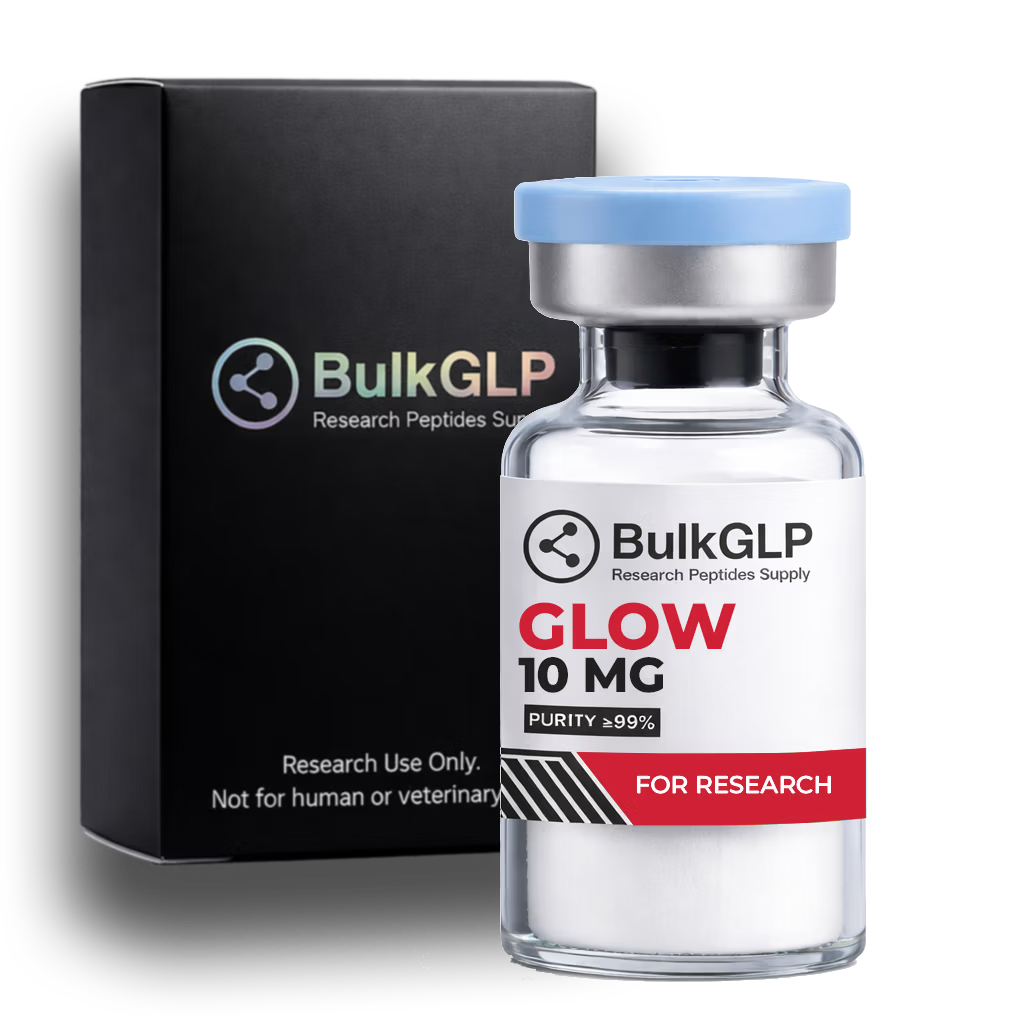
Glow Blend
Free Priority Shipping on Orders $99+
GLOW Blend is a three-component research formulation containing BPC-157, TB-500 (Ac-LKKTETQ, the acetylated seven-residue thymosin beta-4 fragment), and GHK-Cu. Each vial contains a nominal total of 70 mg: 50 mg GHK-Cu, 10 mg BPC-157, and 10 mg TB-500. The lot-matched COA reports the measured results. The TB-500 component refers to the fragment, not full-length thymosin beta-4. For laboratory research use only.
$129.00
Lab reports & batch history 1 current report View lab reportsClose
View laboratory methods and results in each report.
Buy With Confidence
Check the lot, review the results and see our report history—all before you order. Our team is here for product details, shipping and order support.
In stock
In stock
GLOW Peptide Blend: One 70 mg Research Vial
GLOW is sold here as one blended vial, not three separate products. Its nominal formulation is 50 mg GHK-Cu, 10 mg BPC-157 and 10 mg TB-500, for 70 mg total. The current price and availability are shown above. Review the component-by-component results in the lot record when comparing this offer with another blend.
GLOW Blend is a three-component research formulation containing 10 mg BPC-157 (C₆₂H₉₈N₁₆O₂₂), 10 mg TB-500—the N-terminally acetylated seven-residue thymosin beta-4 fragment Ac-LKKTETQ—and 50 mg GHK-Cu (C₁₄H₂₄CuN₆O₄). No specific TB-500 counterion or salt form is asserted without lot-specific confirmation. Lot documentation should identify each analyte, chemical form, purity, and measured content before laboratory use.
GHK-Cu is a copper-binding tripeptide studied in fibroblast gene-expression, extracellular-matrix, collagen, and metalloproteinase models. BPC-157 is a distinct 15-residue synthetic peptide investigated in cellular and preclinical signaling models.
TB-500 is not full-length 43-amino-acid thymosin beta-4. It is the acetylated fragment Ac-LKKTETQ. Published analytical work has characterized TB-500 and its metabolites by LC-MS, while fragment-associated actin and cell-migration hypotheses remain separate from evidence generated with full-length thymosin beta-4. Researchers should not treat the two materials as interchangeable.
For laboratory research use only. Not for human or veterinary administration, diagnostic use, or therapeutic procedures.
GLOW Ordering and Batch Questions
Does quantity 1 mean a 50 mg vial or a 70 mg blend?
Quantity 1 means one GLOW vial with a nominal 70 mg combined label amount. The 50 mg figure describes its GHK-Cu component. The other listed components are 10 mg BPC-157 and 10 mg TB-500. These are nominal formulation amounts, not a transcription of the measured COA results.
How is this GLOW order different from KLOW?
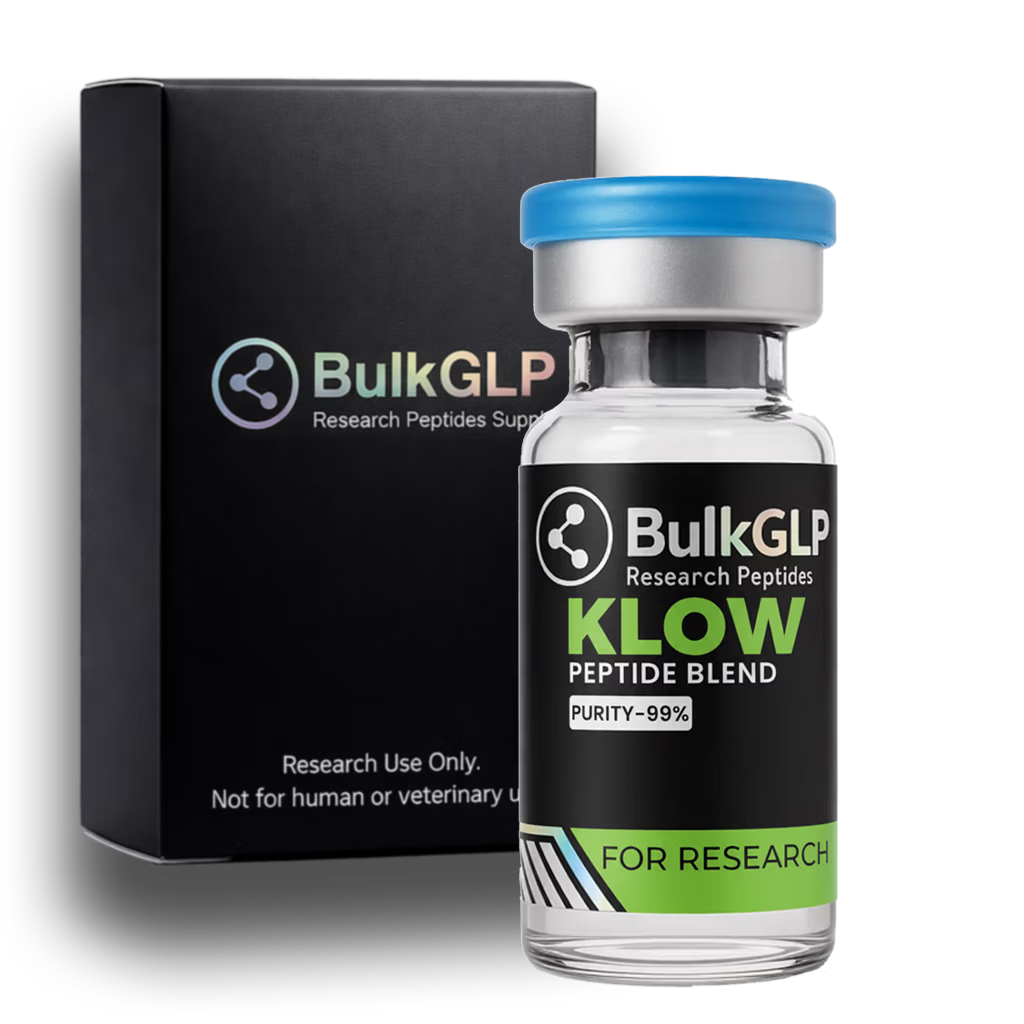
This GLOW formulation lists three components and does not contain KPV. KLOW lists KPV as a fourth component. Match the actual component list to your laboratory’s purchasing specification; the blend names alone do not tell you everything about the material.
What should I compare on the GLOW COA before ordering?
Open the report from the lot records above and read each component’s identity and measured amount, the purity result and the lot number. A combined label total does not replace those individual measurements. Keep the laboratory’s analyte names as printed, and confirm any sequence-specific requirement before ordering.
Blend comparison: See KLOW vs Glow peptide for a component-by-component laboratory research comparison.
Identity and research references
- PubChem: TB-500 identity, sequence, formula, and molecular weight
- LC-MS characterization of N-acetylated LKKTETQ (TB-500)
- Pickart L, et al. GHK peptide as a natural modulator of multiple cellular pathways in skin regeneration. BioMed Research International. 2015;2015:648108.
- Sikiric P, et al. Focus on BPC 157. Current Pharmaceutical Design. 2010;16(10):1224–1234.
| Weight | 0.1 lbs |
|---|---|
| Dimensions | 1 × 1 × 1 in |