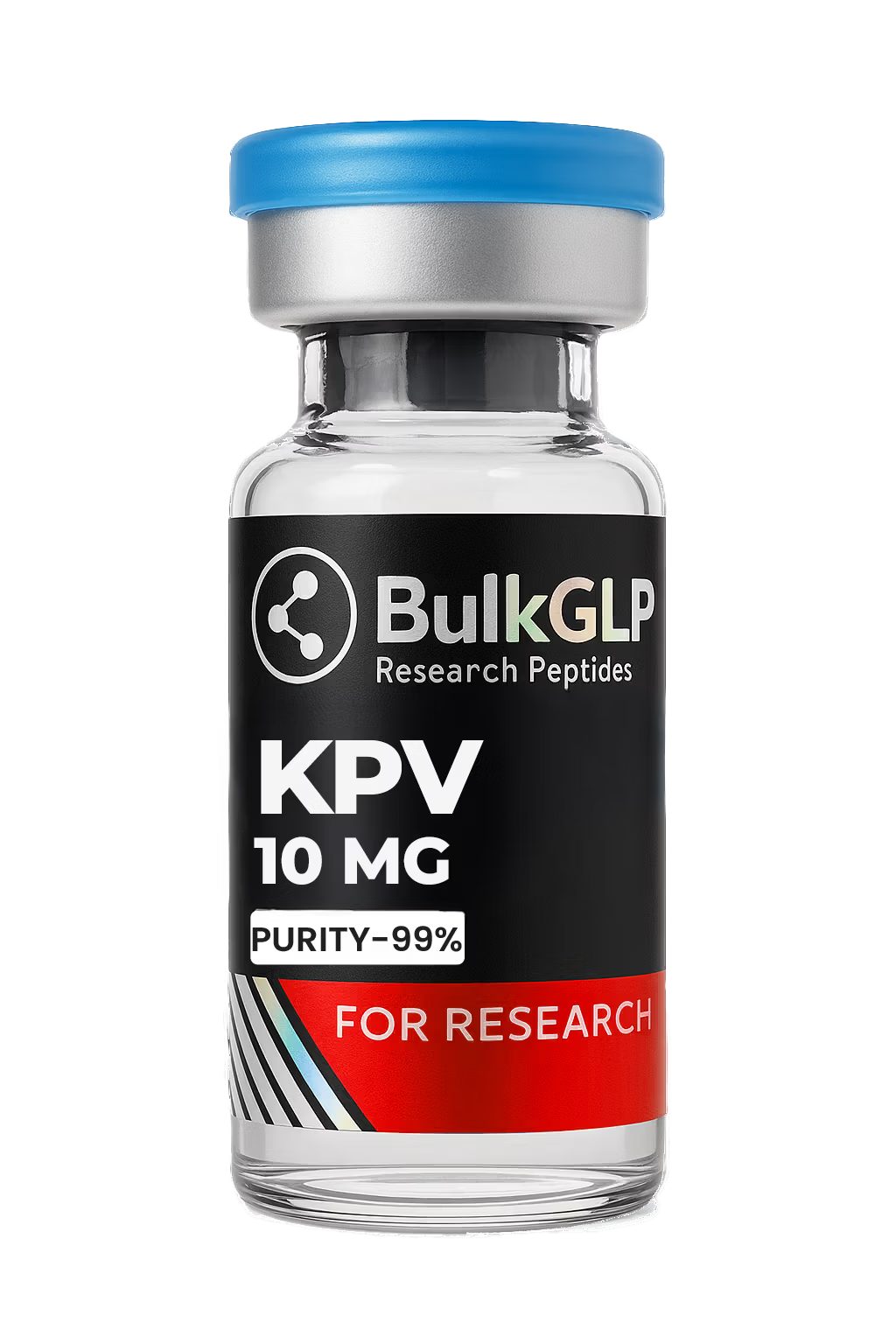
KPV
Free Priority Shipping on Orders $99+
KPV is a synthetic tripeptide consisting of Lysine, Proline, and Valine. It represents the C-terminal amino acid sequence (11-13) of the endogenous alpha-Melanocyte Stimulating Hormone (α-MSH). Research indicates that while this fragment lacks the pigment-inducing melanotropic activity of the full hormone, it retains significant anti-inflammatory properties, specifically investigated in models of gastrointestinal and dermatological inflammation.
For Research Use Only. Not for human consumption.
$70.00
In stock
In stock
KPV is a naturally occurring tripeptide fragment with the molecular formula C₁₆H₃₀N₄O₄. It corresponds to the specific amino acid sequence Lys-Pro-Val. This sequence is derived from alpha-Melanocyte Stimulating Hormone (α-MSH), a peptide known for its role in pigmentation and energy homeostasis. However, the KPV fragment is distinct in that it does not bind to the melanocortin receptors responsible for melanogenesis, allowing researchers to study its anti-inflammatory potential in isolation.
Scientific studies focus on KPV’s ability to modulate the NF-κB (nuclear factor kappa-light-chain-enhancer of activated B cells) signaling pathway. In laboratory models, KPV has been observed to translocate into cells via the PepT1 peptide transporter, where it may downregulate the expression of pro-inflammatory cytokines. This mechanism is of particular interest in research regarding Inflammatory Bowel Disease (IBD) and colitis.
Additionally, KPV is investigated for its antimicrobial activity. Studies suggest that the peptide may disrupt the structural integrity of fungal and bacterial membranes. In dermatological research, KPV is utilized to examine wound healing rates and the reduction of contact dermatitis, promoting the study of peptide-based modulation of the host immune response without the side effects associated with steroidal compounds.
This product is strictly for laboratory and research purposes only. KPV is not intended for human use, diagnostic, or therapeutic procedures. It serves as a reagent for scientific study and method development.
References
- Dalmasso, G., et al. (2008). “PepT1-mediated tripeptide KPV uptake reduces intestinal inflammation.” Gastroenterology, 134(1), 166-178.
- Brzoska, T., et al. (2008). “Alpha-melanocyte-stimulating hormone and related tripeptides: biochemistry, antiinflammatory and protective effects in vitro and in vivo.” Endocrine Reviews, 29(5), 581-602.
- Luger, T. A., et al. (2003). “The role of alpha-melanocyte-stimulating hormone in cutaneous biology.” Journal of Investigative Dermatology Symposium Proceedings, 8(1), 45-52.