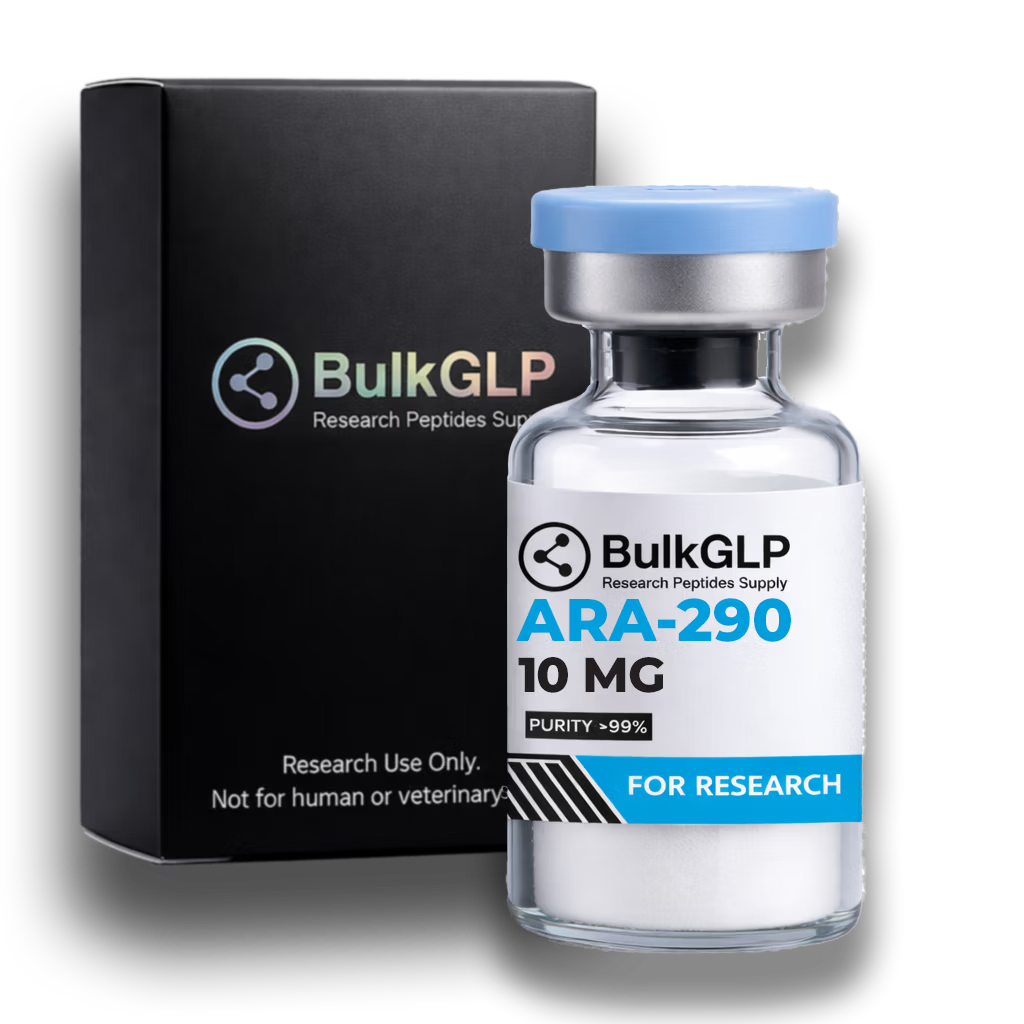
ARA-290 Peptide — 10mg Research Vial
Free Priority Shipping on Orders $99+
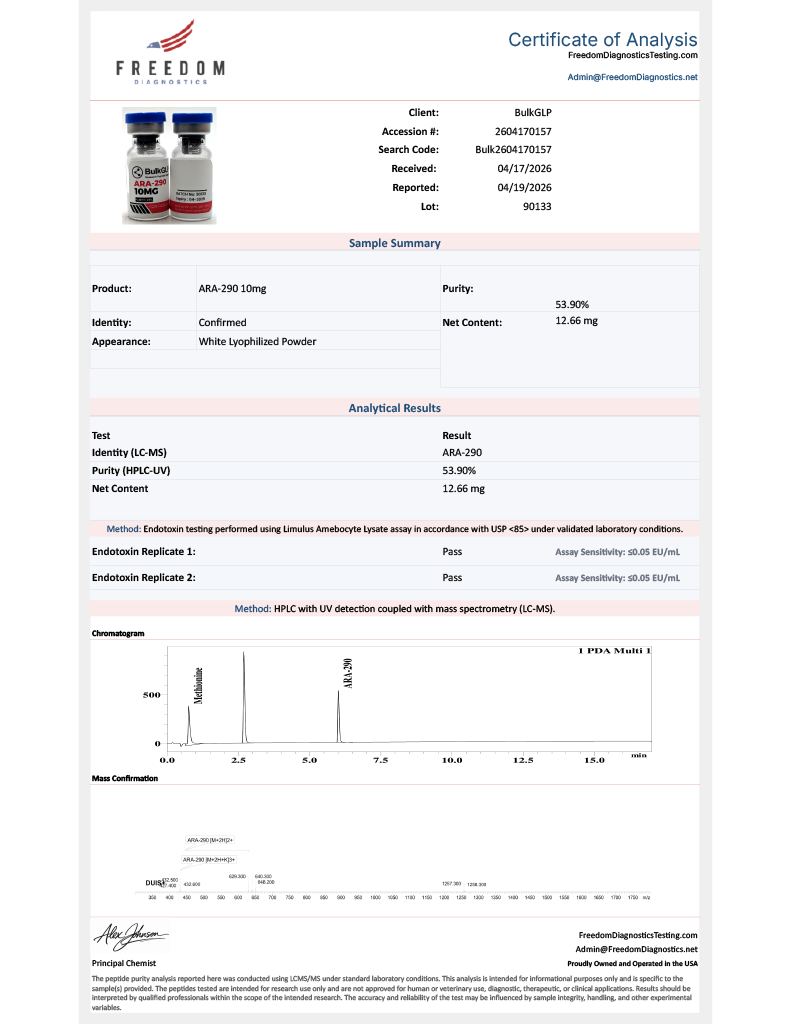
ARA-290 (cibinetide) is supplied as a lyophilized laboratory research material. The linked report for lot 90133 lists 12.66 mg measured content and 53.90% purity for its 10 mg labeled sample. Review this report before selecting the material for analytical work.
$80.00
Lab reports & batch history 1 current report View lab reportsClose
View laboratory methods and results in each report.
Buy With Confidence
Check the lot, review the results and see our report history—all before you order. Our team is here for product details, shipping and order support.
In stock
In stock
ARA-290, also called cibinetide or ARA 290 peptide, is an 11-residue synthetic peptide modeled on the helix-B surface of erythropoietin. This listing supplies a lyophilized material for controlled laboratory research. Its actual lot results are provided below so researchers can assess the material against their method requirements.
Current price and availability
| Listed configuration | Price per listed unit | Price per nominal mg | Availability |
|---|---|---|---|
| ARA-290 research material; 10 mg labeled vial | $80.00 | Not calculated for this configuration | In stock |
Prices use the current store currency and shop tax-display setting. Nominal unit comparisons are rounded. Shipping, separately required supplies, and other applicable checkout adjustments are separate. Confirm the purchasable quantity and final offer in the native product controls and checkout.
Select the purchase configuration above to confirm current contents, price and stock. No unlisted multipack or quantity discount is implied.
| Material | ARA-290 / cibinetide |
|---|---|
| Published vial label | 10 mg; lyophilized material |
| Report and lot | 2604170157; lot 90133 |
| Reported net content | 12.66 mg |
| Reported purity | 53.90% by HPLC-UV |
| Identity result | ARA-290 by LC-MS |
Published lot report
The linked sample report identifies ARA-290 and records 12.66 mg net content, 53.90% HPLC-UV purity and passing endotoxin replicates. The nominal 10 mg label, measured content and chromatographic purity are different fields. Retain the actual 53.90% result when evaluating this material; an endotoxin result does not alter that purity value. Results apply to the submitted sample from lot 90133.
ARA-290 lot 90133 report · How to read a peptide COA
Helix-B peptide and receptor research
ARA-290 was designed from a surface feature of erythropoietin rather than its full protein sequence. Published work describes a non-erythropoietic peptide associated with the innate repair receptor, an EPOR/CD131 complex, and distinguishes this research from signaling through the erythropoietic receptor homodimer. These are properties investigated in defined experimental systems, not a performance claim for the material in this vial.
For receptor or cell-stress work, document the reference material, identity method and sample composition used. The published lot has a 53.90% purity result; researchers should account for the actual report rather than assume a purified single-component reference. The assay design, acceptance criteria and any further characterization belong to the purchasing laboratory.
Primary sources: Brines and colleagues, PNAS (2008): engineered EPO-derived peptides; Brines and colleagues, Molecular Medicine (2015): ARA 290 and the innate repair receptor.
Laboratory storage and handling
Keep the unopened dry material sealed, protected from light and moisture, and under its label-specific storage conditions. After preparation, use a laboratory-validated solvent, container and stability window; a universal refrigerated lifetime is not established by this listing.
Review Reconstitution Solution against your laboratory’s solvent requirements. The peptide calculator performs concentration arithmetic from entered values; it does not establish solvent compatibility or a preparation method.
ARA-290 research FAQs
Is ARA-290 peptide for sale at BulkGLP?
ARA-290 is listed as a lyophilized research vial. The purchase controls show current availability; the published sample label is 10 mg. Review the actual lot results before ordering.
Where can I buy ARA-290 for research?
Use the purchase controls above to check current availability and complete a research order. Product details and the matching lot report should be reviewed before purchase.
What does ARA-290 cost?
The live price table and purchase controls show the current price for the selected configuration. No additional quantity discount is implied; checkout confirms the order total.
Which ARA-290 sizes or formulations are available?
The current listing shows a 10 mg lyophilized vial and no selectable size or formulation variations. No additional sizes or multipack contents are represented on this page.
Where is the ARA-290 COA and what does it show?
The linked report 2604170157 for lot 90133 records ARA-290 identity, 12.66 mg net content, 53.90% HPLC-UV purity and passing endotoxin replicates. The results describe the tested sample; measured content is not the same as purity.
How should ARA-290 be stored and handled?
Keep the unopened dry material sealed, protected from light and moisture, and under its label-specific storage conditions. After preparation, use a laboratory-validated solvent, container and stability window; a universal refrigerated lifetime is not established by this listing.
How is ARA-290 shipped and how quickly?
Orders with cleared payment before 2 PM Central on a business day normally ship that day; later orders ship the next business day. Standard domestic transit is typically 3–5 business days. Checkout shows available services and rates; verification or carrier delays can change timing.
How does ARA-290 differ from erythropoietin?
ARA-290 is a short synthetic peptide modeled on an exposed region of erythropoietin, not the full erythropoietin protein. Published work distinguishes its non-erythropoietic receptor research from the erythropoietic activity of the parent protein.
For laboratory research and development only. Not for human or veterinary use, clinical trials, diagnostic use or therapeutic use.