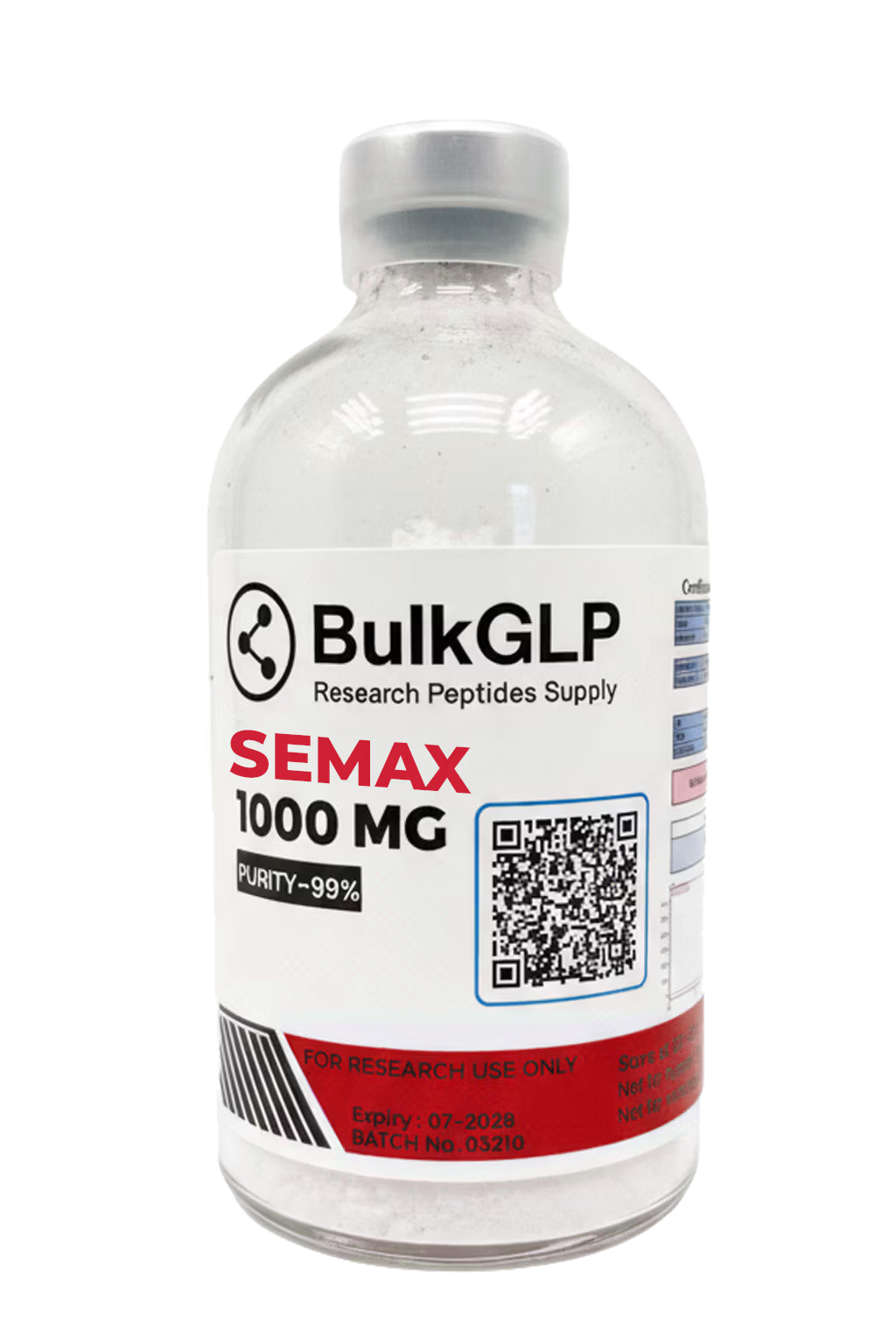
Semax 1000mg
Free Priority Shipping on Orders $99+
Semax is a synthetic heptapeptide that corresponds to the N-terminal fragment of the Adrenocorticotropic Hormone (ACTH), specifically the sequence ACTH(4-10), combined with a C-terminal Pro-Gly-Pro group. Research investigates this peptide for its potential influence on Brain-Derived Neurotrophic Factor (BDNF) and Nerve Growth Factor (NGF) expression in animal models.
For Research Use Only. Not for human consumption.
$2,100.00
In stock
Semax is a synthetic peptide with the molecular formula C₃₇H₅₁N₉O₁₀S. It is structurally derived from a fragment of the endogenous Adrenocorticotropic Hormone (ACTH). Specifically, Semax consists of the amino acid sequence Met-Glu-His-Phe-Pro-Gly-Pro. The inclusion of the Pro-Gly-Pro tripeptide at the C-terminus is designed to enhance the peptide’s resistance to enzymatic degradation by serum peptidases, thereby extending its stability in laboratory environments.
Scientific studies have primarily focused on the interaction between Semax and the expression of neurotrophins. Research in murine models suggests that Semax administration may lead to a rapid increase in the transcription and translation of Brain-Derived Neurotrophic Factor (BDNF) and its specific receptor, TrkB, particularly in the hippocampus and frontal cortex. This mechanism is often explored in the context of neuronal survival and differentiation assays.
Further investigation has examined the peptide’s effects on oxidative stress and hypoxic models. Data indicates that Semax may influence the modulation of nitric oxide synthesis and inflammatory cytokine profiles. Researchers utilize this peptide to study potential neuroprotective pathways and the cellular correlates of memory consolidation and attention, though the exact pharmacodynamics remain a subject of ongoing in vitro and in vivo inquiry.
This product is strictly for laboratory and research purposes only. Semax is not intended for human use, diagnostic, or therapeutic procedures. It serves as a reagent for scientific study and method development.
References
- Eremin, K. O., et al. (2005). “Semax, an ACTH(4-10) analogue with neurotrophic properties, increases BDNF expression in the rat brain.” Molecular Neurobiology, 32(3), 223-233.
- Kaplan, A. Y., et al. (1996). “Synthetic ACTH analogue Semax displays nootropic-like activity in humans.” Neuroscience Research Communications, 19(2), 115-123.
- Manchenko, D. M., et al. (2010). “Nootropic and analgesic effects of Semax following different routes of administration.” Russian Journal of Physiology, 96(10), 1014-1023.
| Dimensions | 1 × 1 × 1 in |
|---|