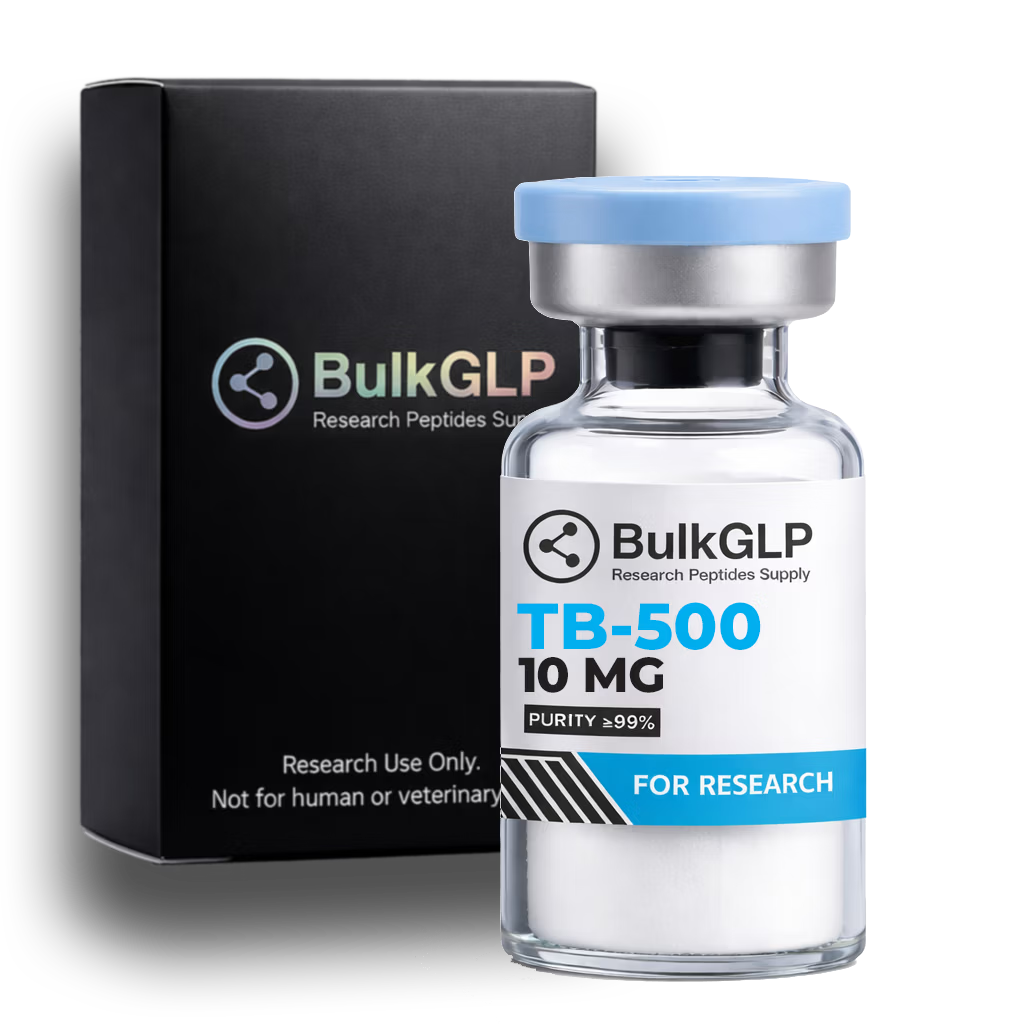
TB-500
Free Priority Shipping on Orders $99+
TB-500 research material for controlled laboratory use. The commercial name does not define a unique sequence. Review the active-lot specification and analytical report for the exact sequence or molecular identity, formulation, measured content, purity, and reported tests. Not for human or veterinary use.
$84.00
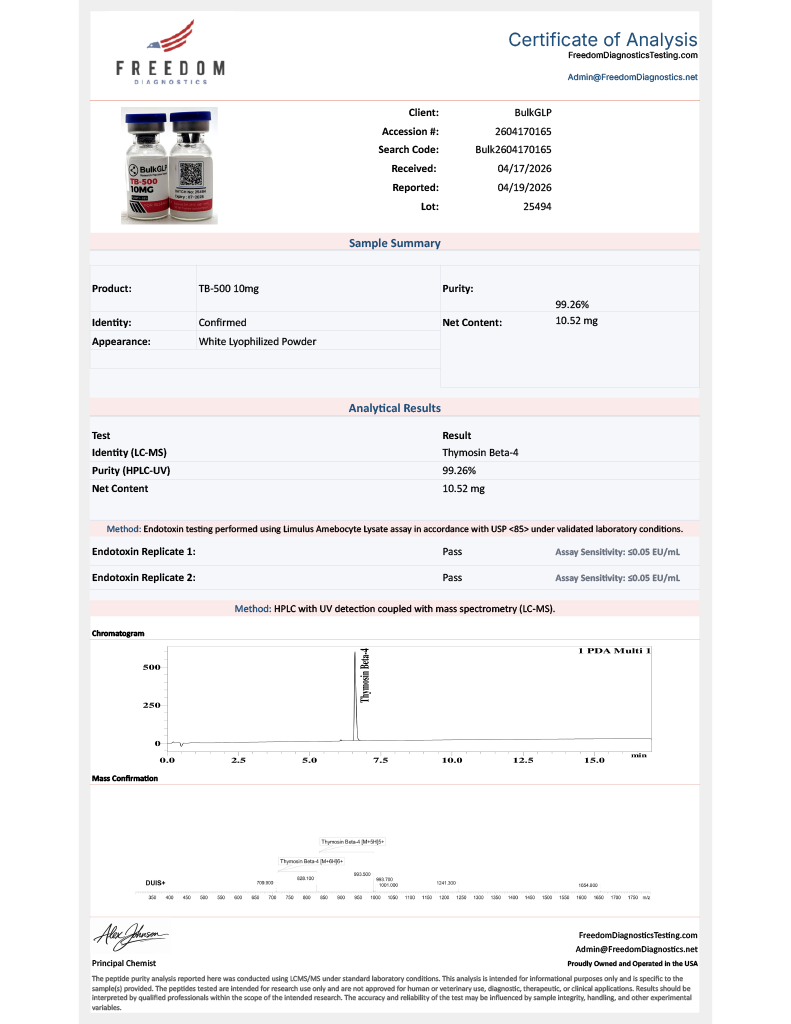
Lot-Specific Analytical Records
Results Reported for the Identified Lot
In stock
In stock
TB-500 research material
“TB-500” is a commercial product name and is not, by itself, an unambiguous chemical identity. The active-lot specification and analytical report—not the product name—must control the sequence, molecular formula, molecular mass, formulation, measured content, purity, and reported tests for the material supplied.
Full-length thymosin beta-4 is a 43-residue peptide. The isolated LKKTETQ region is a distinct, shorter material. This listing does not describe the supplied material as full-length thymosin beta-4, its active region, Ac-LKKTETQ, or another fragment unless the active-lot documents establish that identity.
Documentation required before experimental use
- Unambiguous sequence or molecular identity
- Molecular mass or identity-test acceptance criterion
- Nominal vial content and formulation matrix
- Lot-specific identity, measured-content, and purity results
- Test methods and lot number represented by each report
No actin-binding, angiogenic, regenerative, injury-recovery, or therapeutic effect is claimed for the material sold under this name.
Research-use boundary
For controlled laboratory research only. Not for administration to humans or animals, or for clinical, diagnostic, therapeutic, cosmetic, food, or veterinary use.