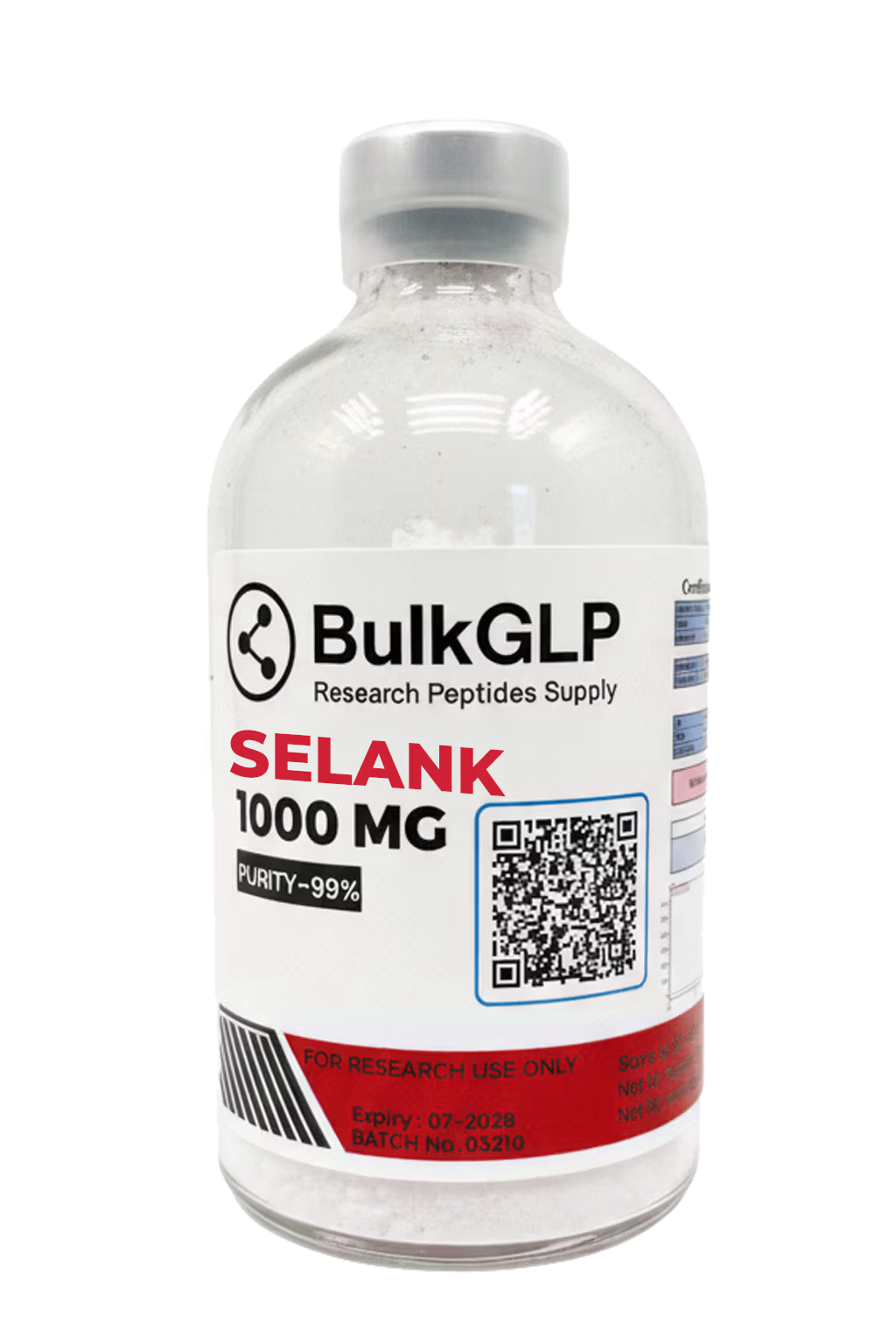
Selank 1000mg
Free Priority Shipping on Orders $99+
Selank is a synthetic heptapeptide derivative of the naturally occurring immunomodulatory peptide Tuftsin. It consists of 7 amino acids and has been studied for its potential neurotropic and anxiolytic-like activity in animal models. Research suggests Selank may influence the metabolism of monoamine neurotransmitters and the stability of enkephalins in the central nervous system.
For Research Use Only. Not for human consumption.
$2,100.00
In stock
In stock
Selank is a synthetic peptide with the molecular formula C₃₃H₅₇N₁₁O₉. It is structurally composed of the tetrapeptide Tuftsin (Thr-Lys-Pro-Arg) with the addition of a Pro-Gly-Pro sequence at the C-terminus. This structural modification is hypothesized to improve the metabolic stability of the peptide in biological mediums compared to endogenous ligands.
Scientific investigations have focused on Selank’s ability to modulate the expression of Brain-Derived Neurotrophic Factor (BDNF) in the hippocampus of murine models. Furthermore, studies suggest that the peptide may inhibit the enzymatic degradation of enkephalins, which are endogenous peptides involved in nociception and stress response. This inhibition is believed to extend the half-life of these regulatory molecules within the nervous system.
In behavioral research utilizing rat models, Selank has been observed to affect dopamine and serotonin turnover rates in the frontal cortex. Researchers explore these pathways to understand potential mechanisms related to anxiety-like behavior, memory retention, and learning processes. The peptide is also subject to studies regarding its immunomodulatory properties due to its Tuftsin lineage.
This product is strictly for laboratory and research purposes only. Selank is not intended for human use, diagnostic, or therapeutic procedures. It serves as a reagent for scientific study and method development.
References
- Semenova, T. P., et al. (2010). “Comparison of the effects of selank and tuftsin on the metabolism of serotonin, dopamine, and norepinephrine in the brain of mice with different phenotypes of emotional and behavioral reactions.” Neuroscience and Behavioral Physiology, 40(9), 1007-1012.
- Kozlovskaya, M. M., et al. (2003). “Selank and short peptides of the tuftsin family in the regulation of adaptive behavior in stress.” Neuroscience and Behavioral Physiology, 33(9), 853-860.
- Ushakova, V. M., et al. (2017). “Gene expression in the hippocampus of rats with different variants of behavior in the elevated plus-maze test under basal conditions and after administration of the peptide selank.” Russian Journal of Genetics, 53(2), 239-246.